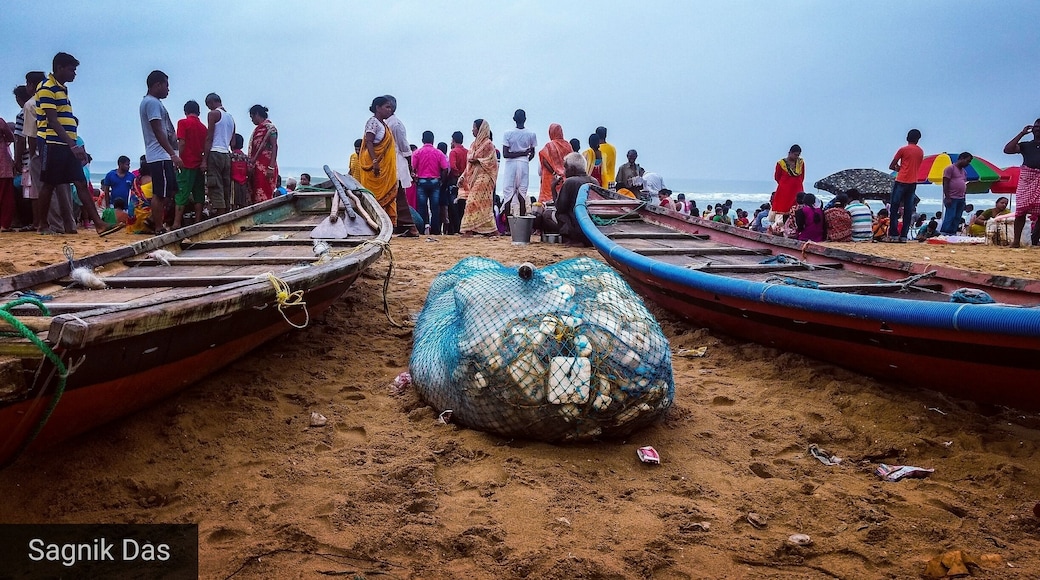
푸리 비치


푸리 비치 여행 정보
가볼 만한 인기 명소
나렌드라 사가르
푸리에서 싱그러운 자연을 볼 수 있는 나렌드라 사가르에 들러 멋진 야외 활동을 즐겨보세요. 이곳을 여행하며 해변에 있는 길을 따라 한가롭게 산책을 즐겨보세요.
푸리 비치 호텔 특가

메이페어 헤리티지, 푸리
Chakratirtha Road Puri Orissa

어 원 프라이드 - 푸리, 바닷가 근처
Hotel A ONE pride - Puri Puri Odisha

피풀 오션 뷰 리조트
plot no 368/3,penthkata Puri OD

호텔 에이 원 럭셔리
Ratan Rd Purussottam Nagar Puri OR

호텔 비치 컴포트
Chakra Tirtha Rd Penthakata Puri OD

호텔 수밤 비치 인 - 근처 바닷가
Chakratirtha road, puri Puri Odisha

고룸고 사카야 인 푸리
Chakra Tirtha Rd Puri Odisha

고룸고 호텔 시야, 푸리
Chakra Tirtha Rd Puri Odisha

호텔 D2 인, 와이파이 주차장 있음, 해변 근처
Chakra Tirtha Rd Badasirei Puri Odisha
표시된 요금은 지난 24시간 이내 성인 2명 1박 기준 최저가입니다. 요금과 예약 가능 여부는 변경될 수 있으며, 추가 약관이 적용될 수 있습니다.
![Konark Sun Temple is a 13th-century CE Sun Temple at Konark in Orissa, India. It is believed that the temple was built by king Narasimhadeva I of Eastern Ganga Dynasty[2] in 1255 CE.[3] The temple complex is in the shape of a gigantic chariot, having elaborately carved stone wheels, pillars and walls. A major part of the structure is now in ruins. The temple is a UNESCO World Heritage Site[4] and has also featured on various list of Seven Wonders of India. The temple is 35 km from Puri and 65 km from Bhubaneswar.
The name Konark derives from the combination of the Sanskrit words, Kona (corner or angle) and Ark (the sun), in reference to the temple which was dedicated to the Sun God Surya.[4]
The monument was also called the Black Pagoda'(Kaala Pagoda) by the European sailors. In contrast, the Jagannath Temple in Puri was called the White Pagoda. Both temples served as important landmarks for the sailors.[5] Konark Sun Temple used Iron beams for its structure.
The temple was originally built at the mouth of the river Chandrabhaga, but the waterline has receded since then. The temple has been built in the form of a giant ornamented chariot of the Sun god, Surya. It has twelve pairs of elaborately carved stone wheels which are 3 meters[4] wide and is pulled by a set of seven horses (4 on the right and 3 on the left).[6] The temple follows the traditional style of Kalinga architecture. It is carefully oriented towards the east so that the first rays of sunrise strikes the principal entrance.[4] The temple is built from Khondalite rocks.[7][8]
The original temple had a main sanctum sanctorum (vimana), which was supposedly 229 feet[6] (70 m) tall. Due to the weight of the superstructure (70 m tall) and weak soil of the area, the main vimana fell in 1837.[9] The audience hall (Jagamohana), which is about 128 feet (39 m) tall, still stands and is the principal structure in the surviving ruins. Among the structures, which have survived to the current day, are the dance hall (Nata mandira) and dining hall](https://images.trvl-media.com/place/6156018/09fea146-89a8-4536-94db-75e3922ba387.jpg?impolicy=fcrop&w=900&h=506&q=mediumHigh)